
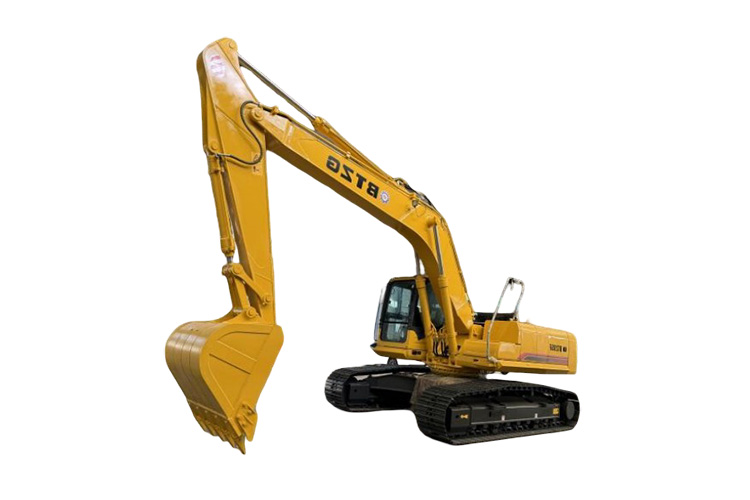
In the wave of global construction, whether in desert cities in the Middle East, mining developments in Africa, or transportation network projects in Southeast Asia, one type of equipment is always present on job sites: the medium hydraulic excavator. Especially the 20-25-ton class, with its excellent adaptability, cost-effectiveness, and efficiency, has become the first choice for global contractors. But have you ever considered why excavators in this tonnage range can transcend geographical and cultural differences to become such a universal «language of engineering»?
1. The Secret of the Golden Tonnage: Why 20-25 Tons?
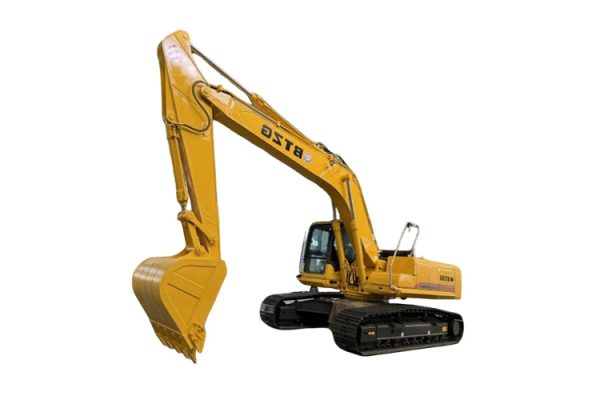
This tonnage range (represented by the 23-ton class) perfectly balances power, mobility, and economy, embodying the practical application of engineering efficiency theory.
-
The Golden Ratio of Power and Size: It possesses sufficient digging force and lifting capacity to handle the vast majority of earthmoving, demolition, and loading tasks. At the same time, its dimensions and weight allow it to be transported on roads in most countries without requiring special permits for oversized loads, enabling flexible relocation and quick deployment to different sites.
-
The Optimal Balance of Fuel Consumption and Output: Compared to smaller machines, it has higher output (earthmoving volume) per unit of time, significantly shortening project timelines. Compared to larger machines, its fuel consumption and maintenance costs are relatively lower. This makes its lifecycle «ton-per-kilometer» cost highly competitive.
-
Unmatched Attachment Compatibility: This tonnage is the most mature platform for hydraulic quick couplers and various attachments (like breakers, shears, compaction plates, and cleaning buckets). One base machine, by switching attachments, can transform into multiple types of equipment, achieving «one machine, multiple functions,» greatly enhancing equipment utilization and return on investment.
2. What Core Performance Aspects Should You Focus on When Choosing a Medium Excavator?
Facing a market full of diverse products, looking only at brand and price is not enough. The following five core performance dimensions determine the machine’s performance in actual projects:
-
Hydraulic System: The Soul of Efficiency and Control:
-
Smooth Combined Movements: Can it smoothly lift the boom and close the bucket while swinging? This directly determines the efficiency of high-frequency compound actions like dumping and leveling. An advanced negative flow control system is key to achieving this.
-
Fuel Economy: Check if it offers multiple work modes (e.g., heavy, economy, precision) and if it can automatically adjust engine speed and hydraulic output based on load for intelligent fuel saving.
-
-
Structural Strength: The Foundation of Durability:
-
Reinforced Work Equipment: Are the boom and arm reinforced to withstand heavy impact loads? Do key pin joints use long-life, lubricated bushings?
-
Robust Undercarriage: A reinforced X-shaped frame and longer, wider tracks provide exceptional stability, effectively dispersing stress and extending the machine’s overall life.
-
-
Serviceability: Time is Money:
-
Centralized Service Points: Are the engine oil, hydraulic oil, and fuel filters grouped for easy ground-level daily maintenance?
-
Open Engine Hood: A fully opening or side-opening hood provides clear access to core components like the engine, radiator, and hydraulic pumps, facilitating inspection, repair, and cooling.
-
-
Operator Environment: The Amplifier of Operator Efficiency:
-
Spacious, Quiet Cab: Reduced noise and vibration, combined with an ergonomic suspension seat and multi-adjustable control levers, significantly delays operator fatigue, improving precision and safety during long shifts.
-
Intelligent Monitoring System: A large LCD display integrating machine status, fault diagnostics, and maintenance reminders makes management clear at a glance.
-
-
Localized Support: The Guarantee for Long-Term Operation:
-
Half the value of a machine lies in the product, half in the service. Is there a well-established after-sales service network, adequate parts inventory, and rapid technical response in the target market? This is more important than any specification on paper.
-
3. In-depth Analysis of Application Scenarios: One Machine, Infinite Possibilities
The value of an excellent medium excavator lies in its seamless integration into various construction phases:
-
Earthmoving: Its core stage, from foundation excavation, trenching to site grading. Efficient cycle times are key.
-
Mining and Quarrying: Equipped with a rock bucket for digging and loading ore and stone. Places extremely high demands on structural strength and cooling systems.
-
Municipal and Utility Work: Requires precise digging in confined spaces, challenging the machine’s maneuverability and fine control.
-
Demolition and Breaking: Transforms into a demolition tool with a breaker attachment. Requires stable hydraulic flow and impact resistance.
-
Material Handling: Loading, unloading, and handling materials in ports and logistics centers, demanding lift height, power, and stability.
4. Calculating Return on Investment: Doing the Math on «Total Lifecycle Cost»
Choosing a medium excavator requires a mindset based on a «Total Cost of Ownership» model:
Total Cost of Ownership = Purchase Price + Fuel Costs + Maintenance & Repair Costs + Downtime Costs — Resale Value
-
Initial Investment: This is one part of the total cost, not the entirety. A higher initial investment that results in lower failure rates, higher availability, and lower fuel consumption may be more cost-effective in the long run.
-
Operating Costs: Fuel is the largest variable. A machine that is 10% more fuel-efficient can save a substantial amount over thousands of working hours.
-
Resale Value Expectation: After project completion, a machine with high market recognition, a good reputation, and complete maintenance records will have a higher resale value, effectively lowering the total cost.

Leave A Comment